Why Emergency Aid Equipment Is Crucial for Indonesia’s Disaster Preparedness
Indonesia, home to more than 270 million people and over 17,000 islands, faces constant threats from natural disasters such as earthquakes, floods, volcanic eruptions, and tsunamis. In 2022, the Indonesian National Board for Disaster Management (BNPB) recorded over 3,500 disasters, displacing more than 3.3 million people. These events exposed urgent gaps in logistics and emergency medical systems—particularly in the availability and distribution of emergency aid equipment.
During the 2018 Palu earthquake and tsunami, for example, tens of thousands of residents were left without access to trauma kits, evacuation stretchers, and shelter equipment. With damaged roads and delayed deliveries, the absence of pre-positioned emergency aid equipment led to slower response and higher casualties during the first 72 hours.
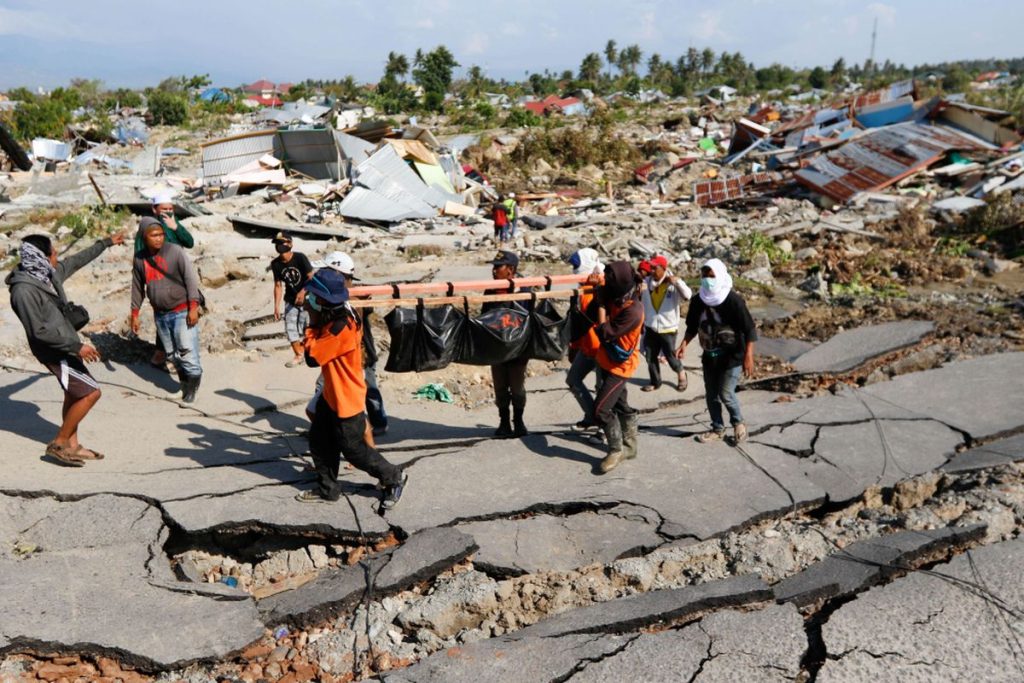
SAR teams carried out evacuations following the 2018 Palu tsunami. The need for emergency aid equipment became a national concern. (Photo: Kompas.com – “Day 4 After the Central Sulawesi Tsunami: 6,399 SAR Personnel and 16 Heavy Equipment Units Deployed”)
To avoid similar setbacks, local disaster response teams and humanitarian organizations require reliable, portable, and durable tools—such as first response backpacks, field tents, and rapid deployment kits—that are tailored to Indonesia’s challenging terrains.
Opportunities for Innovation and Market Growth in Emergency Aid Equipment
As the country invests in disaster risk reduction (DRR) and regional readiness, government bodies and NGOs are ramping up their focus on pre-stocked emergency kits, water purification systems, PPE, and other essential tools. There’s a clear call for innovation: lightweight materials, modular and stackable packaging, and digital integration—such as AI-powered communication systems—can significantly improve response efficiency.
For global suppliers, this is a prime moment to enter a market backed by strong government policy and growing demand. The Ministry of Health and BNPB are encouraging international partnerships, especially with OEMs and retailers capable of operating within ASEAN’s logistics network.
In short, Indonesia needs not just generic solutions—but emergency aid equipment that’s adaptable, rugged, and responsive to local realities.
Be Part of the Solution: Explore Indonesia’s Aid Equipment Market at EDRRI 2025
The Emergency Disaster Reduction & Rescue Expo Indonesia (EDRRI) is the premier platform to connect with Indonesia’s disaster management stakeholders and explore this high-impact sector:
Jakarta International Expo, Jakarta
13–15 August 2025
Learn more about EDRRI
Register as a visitor
By attending, you’ll gain direct access to procurement teams, showcase your latest emergency aid equipment, and discover distribution partnerships that matter. Don’t miss the opportunity to make a real impact in one of the world’s most disaster-prone countries.